Loading…
Literature · novel
Below the Crying Mountain
- Publisher
- University of the Philippines Press
- Year
- 2010
- Language
- English
- Pages
- 168
- ISBN
- 9789715426428
- Availability
- In print
Still in print: the link goes to a shop that sells it.
About the book
A novel of Sulu in the 1970s, of a Tausug family and the war that came to Jolo. It was longlisted for the Man Asian Literary Prize and won the UP Centennial Literary Prize.
This novel is set in Jolo during 2 bloody days in February 1974, under martial law, when the town burned in the fighting. It follows 2 women: Rosy France, a mestiza from Zamboanga who falls in love with a rebel leader called the Professor, and Nahla, a young Tausug woman. The Professor is a fictional figure modelled on Nur Misuari.
Criselda Yabes is a Filipino journalist and author who also wrote The Battle of Marawi. The novel won the University of the Philippines Centennial Literary Prize and was longlisted for the 2010 Man Asian Literary Prize. Penguin later republished it under the title Crying Mountain.
From globalnation.inquirer.net, csmonitor.com, thetorogichronicles.com.
More by Criselda Yabes
2011In print
Peace WarriorsCriselda Yabes
Years on the road with the army in Mindanao and Sulu, and the soldiers who found themselves building schools as often as fighting.
2020In print
The Battle of MarawiCriselda Yabes
The siege of Marawi as the people who fought it and lived through it remember it, by a journalist who has followed the military in Mindanao for thirty years.
On the same shelf
1985Out of print
The Contemporary Muslim Movement in the PhilippinesCesar Adib Majul
Majul’s short account of the Moro struggle of the 1970s and the rise of the Moro National Liberation Front, written for readers abroad.
1980Out of print
Revolt in MindanaoT. J. S. George
A journalist’s account of the Moro revolt of the 1970s, the MNLF and the Marcos government’s war, written as it happened.
1990Out of print
Muslim SeparatismW. K. Che Man
The Moro and Patani Malay movements side by side: their histories, their organisations and what each state did about them, in the first full comparison of the two.
2007In print
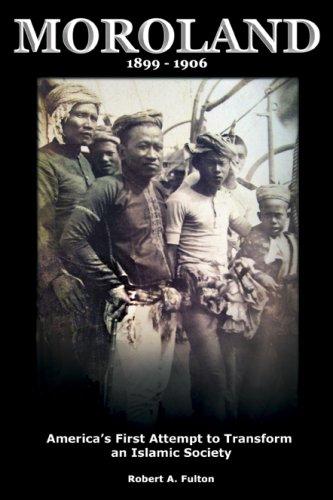
Moroland, 1899–1906Robert A. Fulton
The first years of the American occupation of the Moro country, from Bates’s treaty with the Sultan of Sulu to Bud Dajo, told campaign by campaign from the army’s records.
2011In print
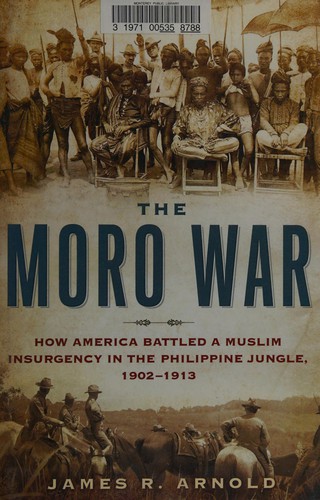
The Moro WarJames R. Arnold
The American campaigns against the Moros under Wood, Bliss and Pershing, from Bud Dajo to Bud Bagsak, as a military history for the general reader.
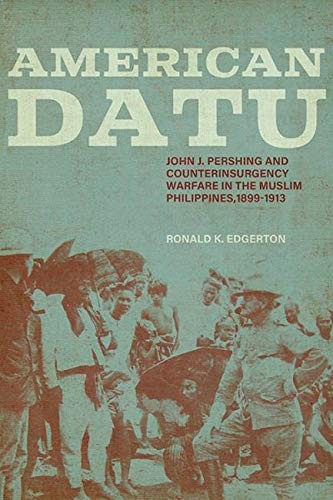
2020In print
American DatuRonald K. Edgerton
Pershing’s years among the Maranao and in Sulu, as a captain at Lake Lanao and as governor of the Moro Province, and the mix of diplomacy and force he learned there.
More from University of the Philippines Press
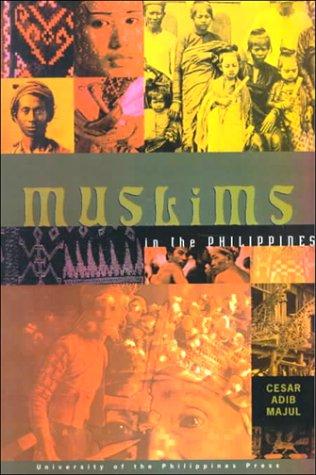
1973In print
Muslims in the PhilippinesCesar Adib Majul
The standard history of the Muslim peoples of the Philippines: the coming of Islam, the sultanates of Sulu and Maguindanao, and three centuries of Spanish wars against them, told from the Moro side of the record. Reissued by the University of the Philippines Press in 1999.
1989Out of print
Decolonization and Filipino Muslim IdentitySamuel K. Tan
What decolonisation meant for a people who did not see the republic as their own, and how a Filipino Muslim identity was argued over in the decades after independence.
1997In print
Born in the Year 1900 and Other StoriesAida Rivera-Ford
Short stories by the Jolo-born writer best known for “The Chieftest Mourner”, still one of the most taught stories in Philippine classrooms, from the University of the Philippines Press.
2001In print
The Moro Islamic ChallengeSoliman M. Santos Jr.
Whether the Philippine Constitution can accommodate the Moro demand for self-rule, and what would have to change, by a human rights lawyer who worked the peace process for years.
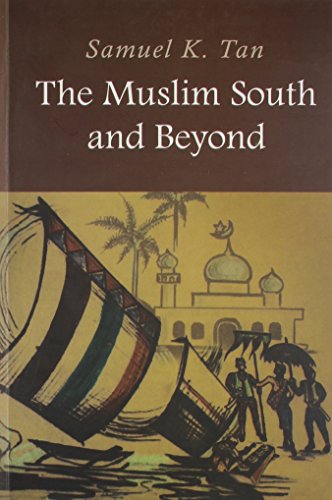
2010In print
The Muslim South and BeyondSamuel K. Tan
Tan’s later essays on the history and historiography of the Muslim South, collected at the end of his career.
2013In print
Costly Wars, Elusive PeaceMiriam Coronel-Ferrer
Essays written across two decades of the Philippine peace processes, with the Moro fronts and with the communists, by the scholar who would chair the panel that signed the Comprehensive Agreement.