Loading…
History · book
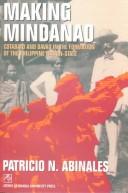
Making Mindanao
Cotabato and Davao in the Formation of the Philippine Nation-State
- Publisher
- Ateneo de Manila University Press
- Year
- 2000
- Language
- English
- Pages
- 235
- ISBN
- 9789715503495
- Availability
- In print
Still in print: the link goes to a shop that sells it.
About the book
How Cotabato and Davao were drawn into the Philippine state in the first half of the twentieth century, through the datus and settler elites who learned to work it, and what that made of Mindanao politics.
This study compares the provinces of Cotabato and Davao to show how the Philippine state took hold in Mindanao. It covers the American colonial period from 1900 to 1941 and the years after independence up to martial law in 1972.
Patricio N. Abinales argues that local power was shaped by the building of the state, not only by ethnicity or ideology. The state could rule this frontier because the strongmen who controlled it came to terms with each other and with Manila. Southern Mindanao stayed stable until Ferdinand Marcos changed the rules in the late 1960s and early 1970s. The book is a revised version of his doctoral thesis at Cornell University.
Abinales grew up in Ozamiz City and teaches at the University of Hawaii at Manoa. Ateneo de Manila University Press later issued an expanded 20th anniversary edition.
From thefilipinochronicle.com, mindanews.com, unipress.ateneo.edu.
HistoryPolitics and governanceColonial period
Cover from Open Library, shown to identify the book; its rights stay with the publisher.
More by Patricio N. Abinales
2010In print
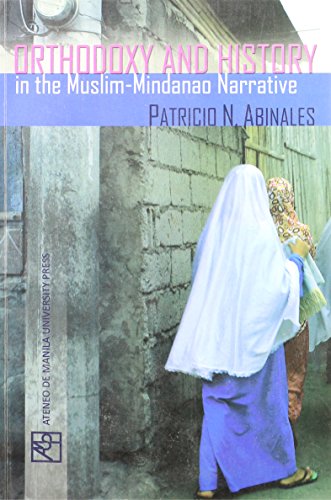
Orthodoxy and History in the Muslim-Mindanao NarrativePatricio N. Abinales
Essays questioning the received story of the Moro struggle, the unbroken resistance from Spain to the present, and asking what the record shows instead.
On the same shelf
1973In print
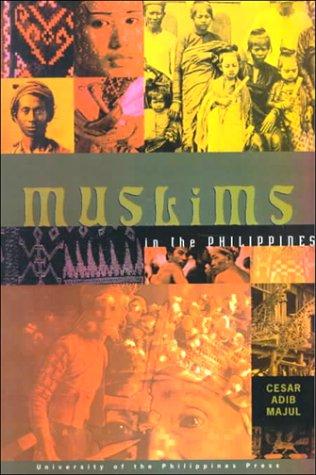
Muslims in the PhilippinesCesar Adib Majul
The standard history of the Muslim peoples of the Philippines: the coming of Islam, the sultanates of Sulu and Maguindanao, and three centuries of Spanish wars against them, told from the Moro side of the record. Reissued by the University of the Philippines Press in 1999.
1985Out of print
The Contemporary Muslim Movement in the PhilippinesCesar Adib Majul
Majul’s short account of the Moro struggle of the 1970s and the rise of the Moro National Liberation Front, written for readers abroad.
1905Free to read
Studies in Moro History, Law, and ReligionNajeeb M. Saleeby
The first English account of Maguindanao’s genealogies and of the law codes and Islam of Maguindanao and Sulu, translated by an American colonial official who read the originals. Out of copyright and free to read.
1908Free to read
The History of SuluNajeeb M. Saleeby
Sulu from its earliest written genealogies to the American arrival, drawn from the sultanate’s own documents, Spanish records and the author’s years in Jolo. Out of copyright and free to read.
1977Out of print
Mandate in MorolandPeter G. Gowing
How the United States ruled the Moro Province and the Department of Mindanao and Sulu, from the Bates Treaty to the start of Filipinization, from the records of the men who governed. Reprinted by New Day in 1983.
1979Out of print
Muslim Filipinos: Heritage and HorizonPeter G. Gowing
A general introduction to the Muslim peoples of the Philippines, their history, faith and institutions and their place in the republic, written for Filipino readers from the Dansalan Research Center in Marawi.
More from Ateneo de Manila University Press
1991Out of print
Liberalism and the Quest for Islamic Identity in the PhilippinesKenneth E. Bauzon
How the liberal state and the Moro search for an Islamic political identity have failed to meet, by a Filipino political scientist.
2001In print
MagosahaH. Arlo Nimmo
Nimmo’s return to the Sama Dilaut three decades on: the full ethnography of a people who had by then mostly come ashore.
2004In print
The Great IslandMiguel A. Bernad
Essays on the exploration of Mindanao and the Christian missions there from the sixteenth century on, by a Jesuit historian who spent his later life in Cagayan de Oro.
2005In print
UkkilLigaya Fernando-Amilbangsa
The carved, woven and worked ornament of Sulu, ukkil, in a large illustrated study by the dancer and scholar who spent her life recording the archipelago’s arts.
2007In print
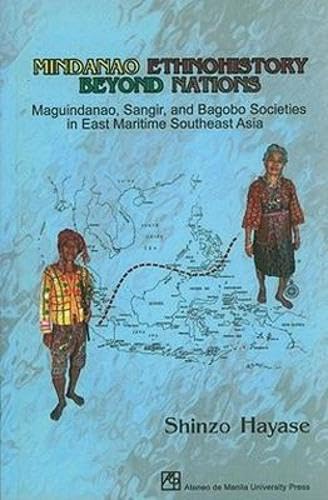
Mindanao Ethnohistory beyond NationsShinzo Hayase
Maguindanao, Sangir and Bagobo as peoples of one sea rather than of two countries, in a history that crosses the border with Indonesia the way they did.
2008In print
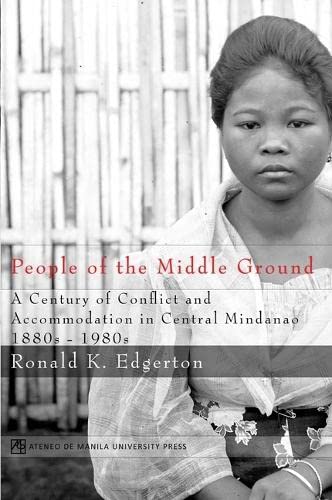
People of the Middle GroundRonald K. Edgerton
A hundred years in the Bukidnon–Lanao borderlands, where Maranao, Lumad, settlers and the state met and sometimes made terms.